
TRAINING
Good documentation is part of good care
Notes and forms can feel like the least important part of the day. They aren't.
When documentation is late, vague, or missing something Medicaid requires, a claim can be denied — and what's actually at stake isn't paperwork. It's a child's authorized hours, and a family who has to hear that services are pausing while something gets sorted out.
So we train our own clinicians — RBTs, BCBAs, and BCaBAs — across every county we serve. Not to add process for its own sake, but so the people doing the work aren't guessing about what's expected of them.
WHAT WE COVER
What each session covers
Practical, current, and built around the questions our team actually brings.
1
Regulatory updates
What's changed in Medicaid's requirements, explained plainly and current as of the session.
2
Forms and notes
Refreshers on how to complete each form and write session notes that hold up.
3
Documentation expectations
The standard we hold across the agency — so it looks the same in Doral as it does in Orlando.
4
Live Q&A
Time to ask about the situation you actually ran into last week. Usually the most useful part of the session.
WHO IT'S FOR
Our clinical team, in every county
HOW IT WORKS
In Doral, or wherever you are
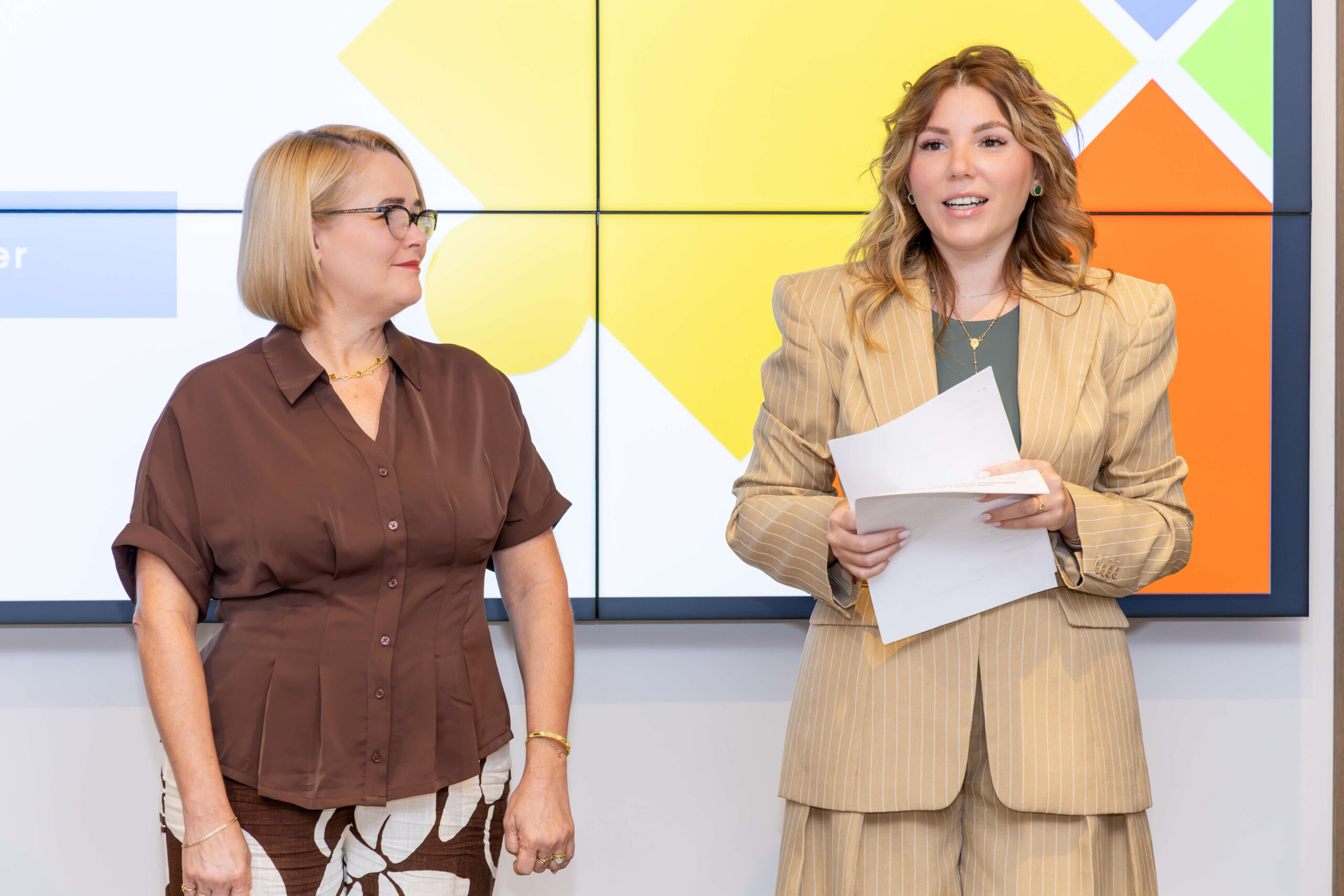
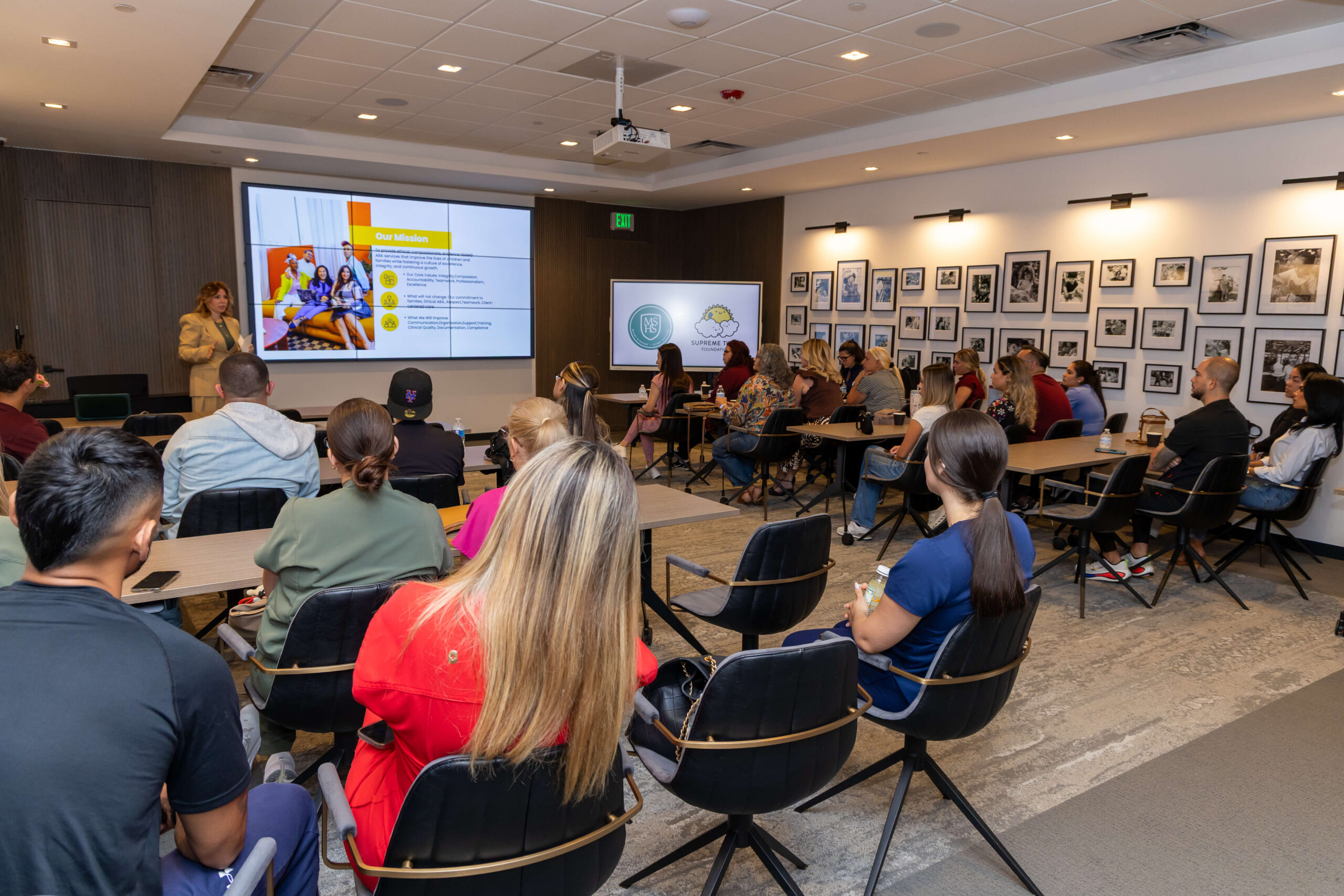
Training runs in person at our Doral center, and over Zoom for anyone who can't make the drive. As we've grown across Florida, that second option stopped being a convenience and became the point — a clinician in Fort Myers or Orlando shouldn't lose a day to a highway to hear what changed.
The people who do this work deserve support
We'd rather invest in our clinicians than expect them to figure it out alone. If that's the kind of team you want to be on, we'd like to hear from you.
See Open Roles