
APPLIED BEHAVIOR ANALYSIS
ABA therapy, built around your child
You've heard the letters "ABA" — from a doctor, a friend, maybe your insurance company. Here's what it actually means for your child, and how it works at Miami Supreme.
UNDERSTANDING ABA
What is ABA therapy?
ABA stands for Applied Behavior Analysis. It's a way of understanding how children learn — and using that understanding to teach the skills that help them in everyday life.
It isn't new, and it isn't guesswork. ABA is built on decades of research. It can help a child learn to ask for what they need, follow a routine, play with another child, or stay safe — and it helps with behaviors that make daily life harder, not by forcing change, but by teaching new ways to communicate and cope.
At Miami Supreme, ABA is never about "fixing" your child. Your child isn't a problem to be solved. The goal is to give them more ways to be understood — and to help your whole family breathe a little easier.
THE CLINICAL DEFINITION
An evidence-based approach to understanding behavior — and to teaching skills that matter in a person's real life.
That's applied behavior analysis. The providers who deliver it — BCBAs, BCaBAs, and RBTs — are certified through the BACB, the field's certifying board.
WHAT IT BUILDS
How ABA can help your child
Every plan is different, but good ABA tends to grow skills like these — one small, real step at a time.
Communication
Using words, signs, pictures, or a device to ask for what they want and tell you how they feel.
Everyday routines
Getting dressed, brushing teeth, eating, sleeping, using the bathroom — the rhythms of a normal day.
Play & social skills
Taking turns, sharing, joining other children, and making a friend.
Learning & focus
Following simple directions, sitting for an activity, and getting ready for school.
Handling big feelings
Finding calmer ways through frustration, change, and new places.
Safety & independence
Staying safe and doing more on their own, step by step.
INSIDE THE ROOM
What a session really looks like
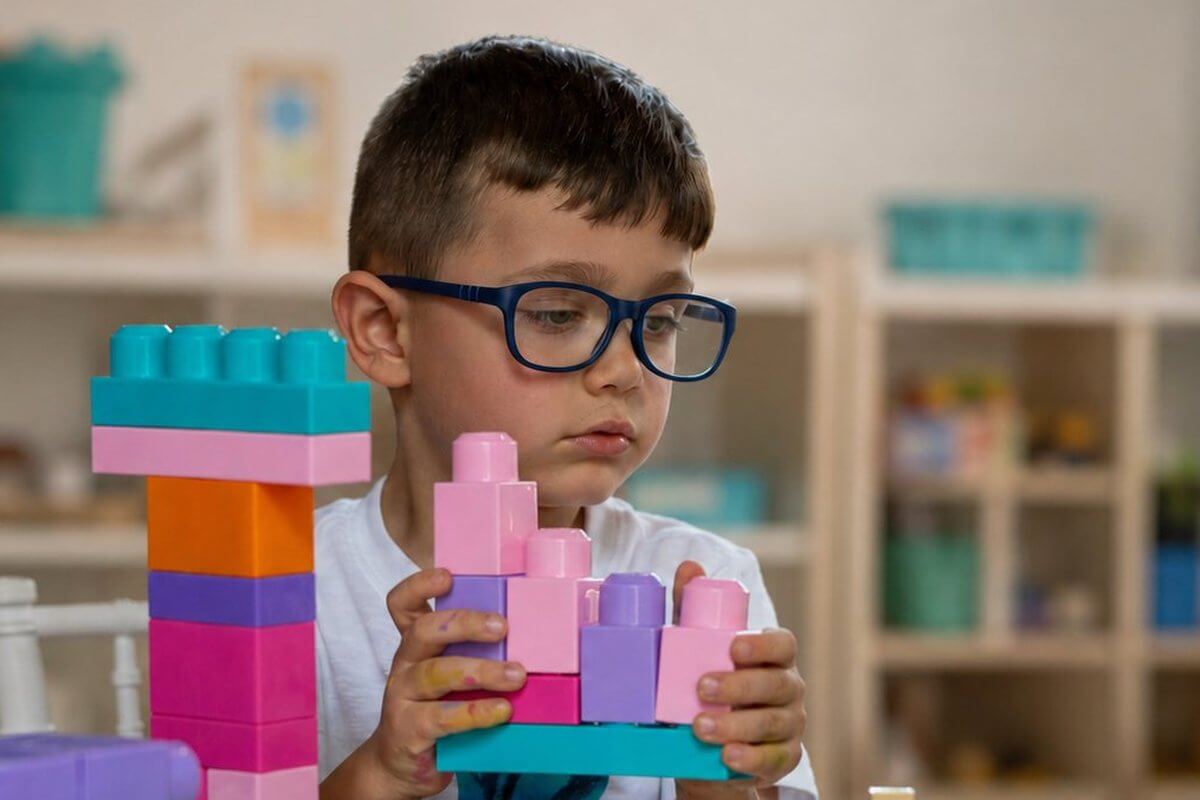
Forget the idea of a child doing drills at a desk for hours. A session usually looks like play. Your child works with a Registered Behavior Technician (RBT), following a plan written and overseen by a Board Certified Behavior Analyst (BCBA).
They might build with blocks, sing, draw, or play a game — and inside that play, your child is learning real skills. We follow your child's lead, notice what they love, and use it. When something works, we do more of it.
And you're part of it. We show you what we're doing and why, so the progress doesn't stop when we leave the room.
No two children respond to therapy the same way — and we wouldn't want them to.
Some children take to ABA quickly; others need time to feel safe. Some race ahead in one area and go slower in another. That's all normal — and it's exactly why your child's plan is built for your child, never copied from a template. For some children, art or music opens a door that words can't. When it fits, our Art & Creativity and Music & Movement programs run alongside ABA, never instead of it. Explore the links below.
WHO'S IN YOUR CORNER
The people matter as much as the method
We were founded by a parent who searched a long time for therapists who would truly see his children — not just process them as a case. So we choose people who connect with your child, not just people with the right letters after their name.
And our work is held to an outside standard, so you never have to take our word for it alone.
BHCOE Full Accreditation
An independent review of our clinical work, our team, and how families actually experience our care. Most Florida ABA agencies don't hold it.
WHERE CARE HAPPENS
In-home, at our center, or both
Whatever serves your child best — many families do a mix.
In your home
Your child learns in the place they're most comfortable, on the routines that matter most to your family — mealtimes, mornings, bedtime, siblings and all.
At our Doral center
A calm, focused space designed for therapy — and a chance for your child to be around other children in a setting built for them.
GOOD TO KNOW
Questions parents ask us
What age can my child start ABA?
Many children begin as early as age 2, but there's no single "right" age. If your child has an autism diagnosis or a developmental concern, it's worth a conversation — reach out and we'll help you figure out the next step.
Does my child need an autism diagnosis first?
Insurance usually requires a diagnosis to cover ABA. If you're still in that process, call us anyway — we can point you in the right direction, including free evaluation help through our foundation partner.
Is ABA only for severe cases?
No. ABA helps children across a wide range of needs and abilities. The plan is built around your child, wherever they are today.
How many hours a week will my child need?
It depends on your child's needs and goals. Your BCBA will recommend a schedule after getting to know your child — and you're always part of that decision.
Will I be involved?
Yes. We see the parents, too. We show you what we're working on and how to carry it through at home, because you're the most important person in your child's world.
Do you come to our home?
Yes — we offer in-home ABA, center-based ABA in Doral, or a mix of both.
Let's find out what your child is covered for
You don't have to have all the answers before you reach out. You just have to start. Tell us a little about your child, and we'll handle the rest — same-day or next-day, with a real person who already understands.
Verify Your Insurance